15 Signs Your School Needs an ERP System
As schools grow, managing admissions, attendance, examinations, fee collection, and parent communication manually becomes increasingly difficult. If your…
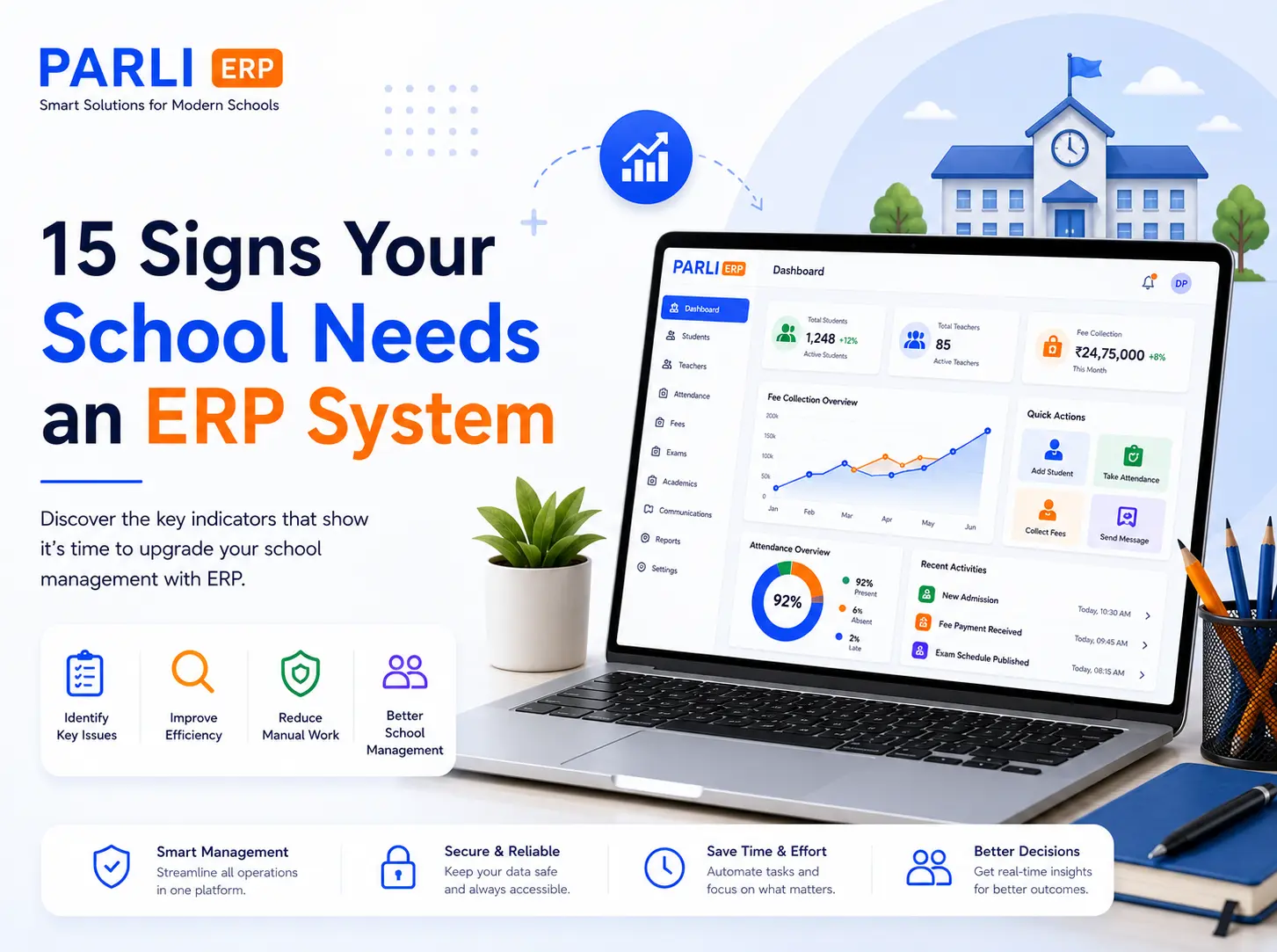
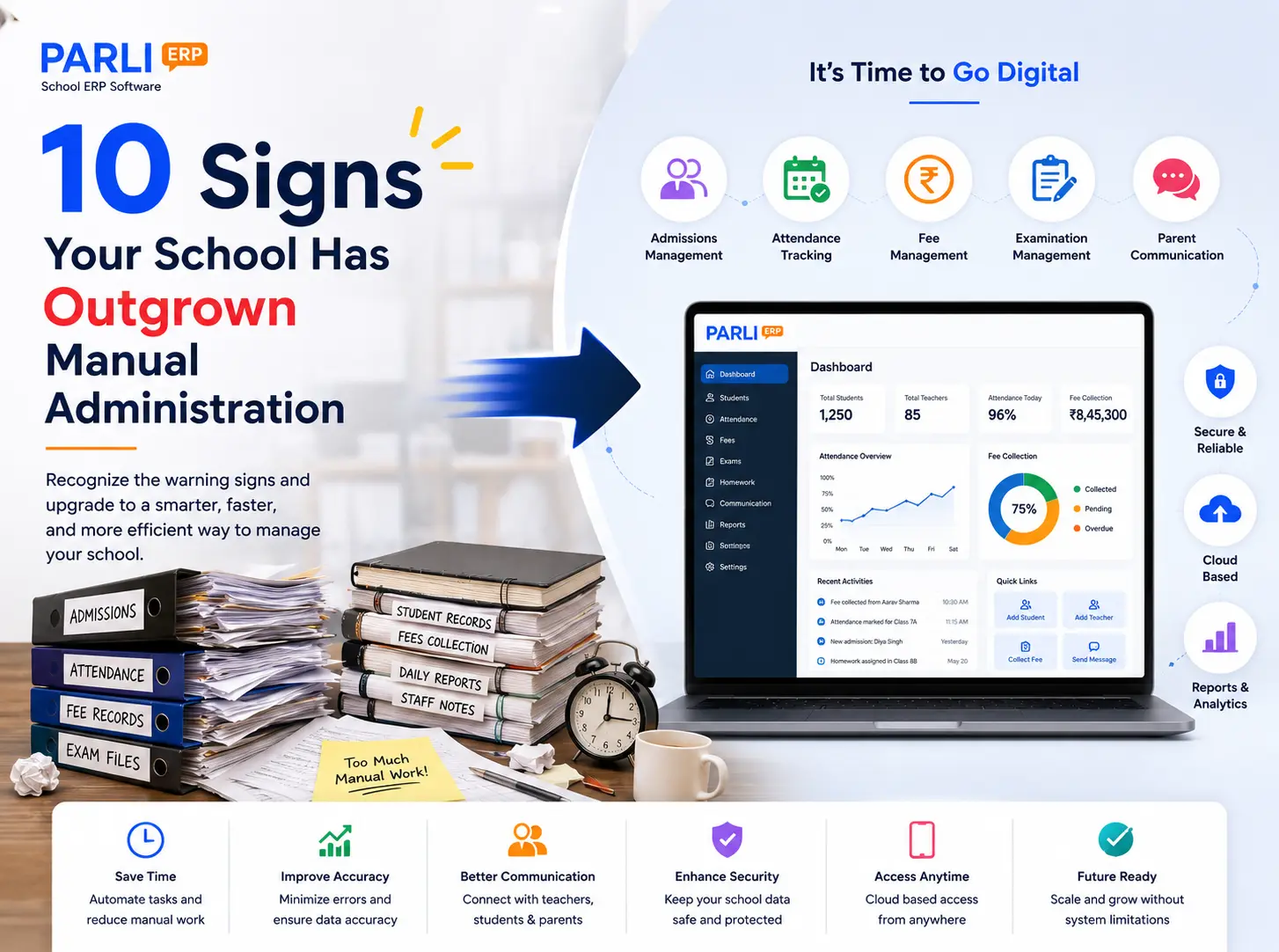
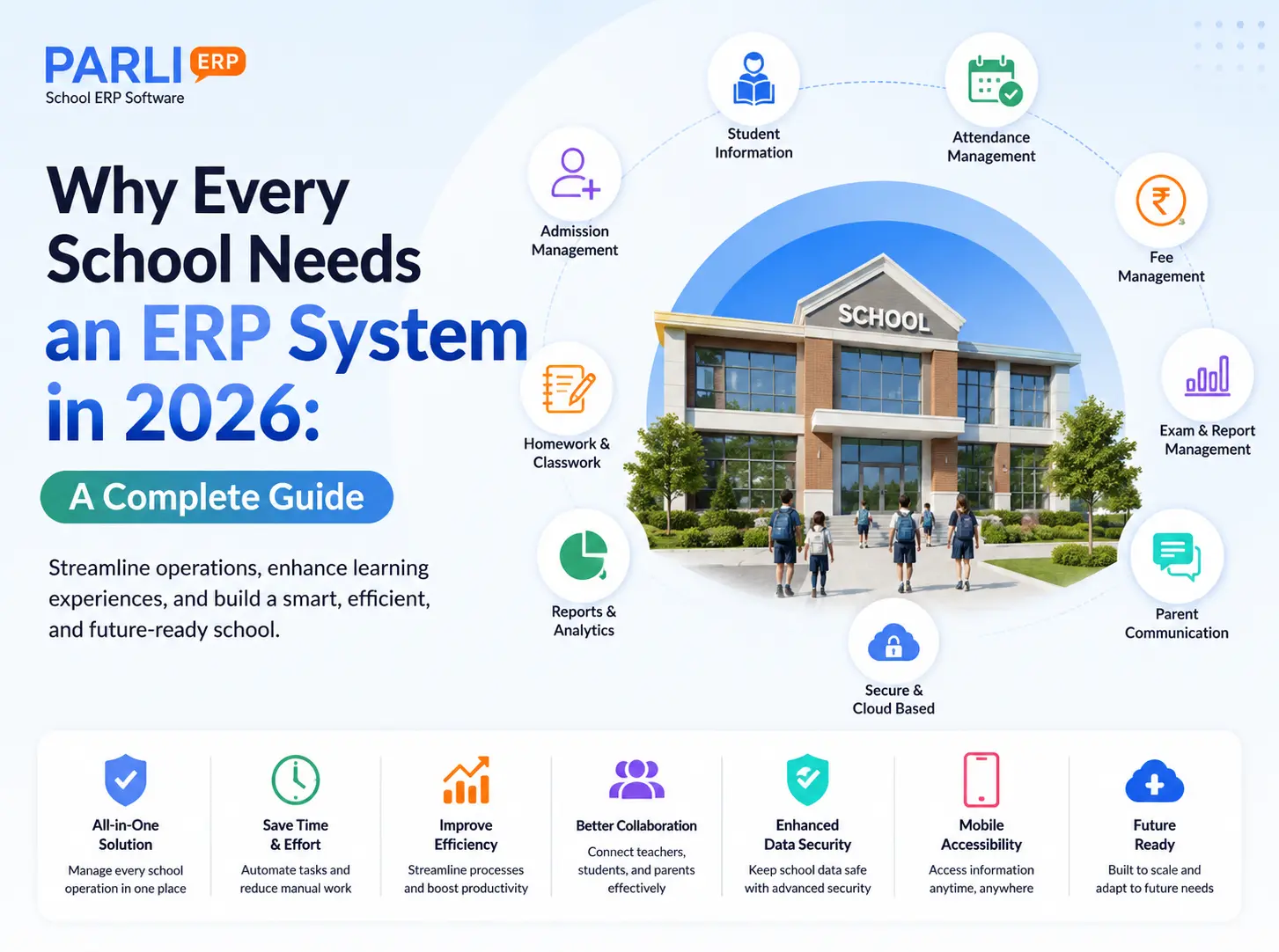
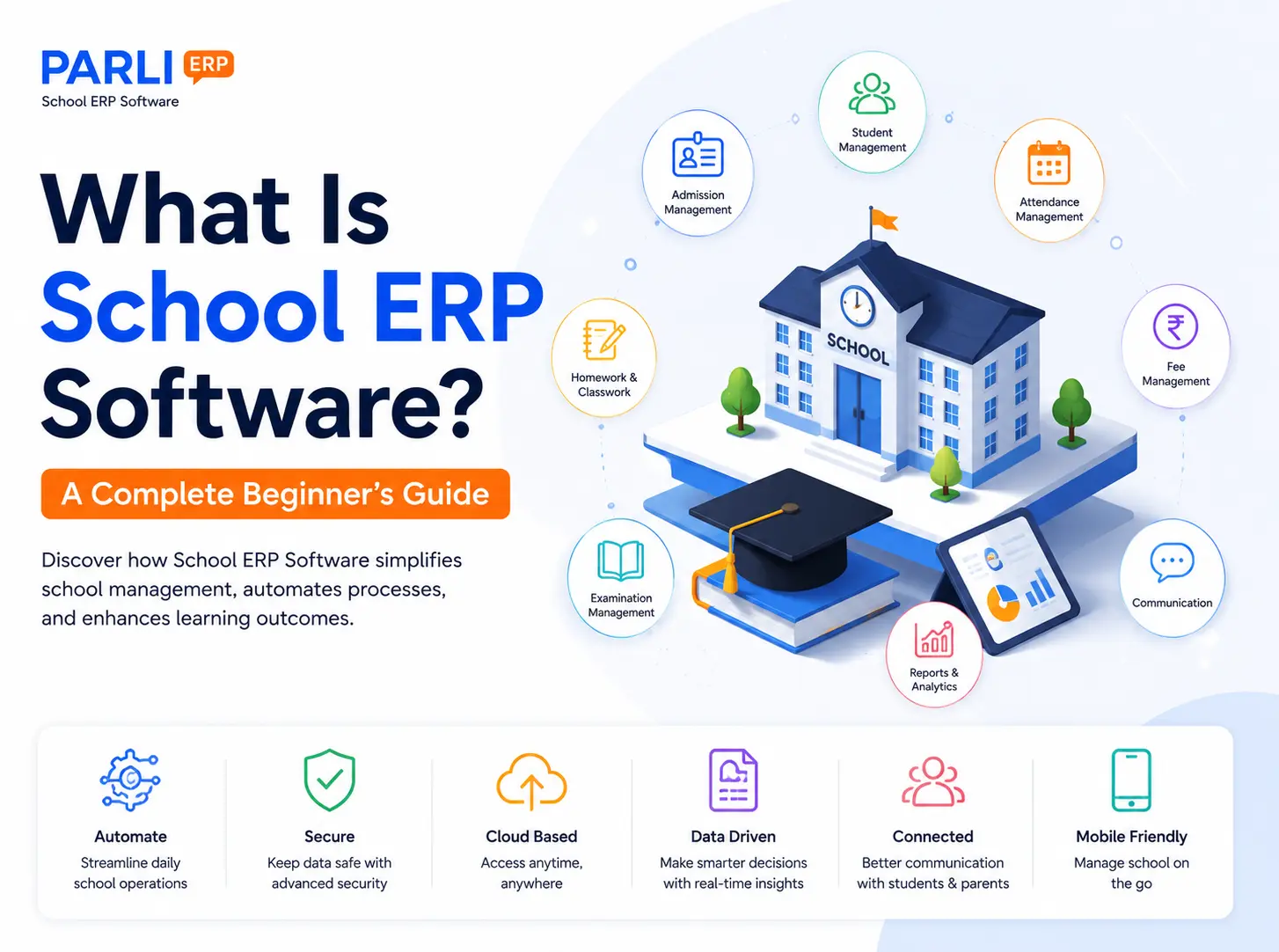
As schools grow, managing admissions, attendance, examinations, fee collection, and parent communication manually becomes increasingly difficult. If your staff spends more time on paperwork than supporting students, it may be time to adopt a School ERP System. Here are 15 clear signs your school has outgrown manual administration.
Attendance Is Still Managed Using Excel Sheets
If teachers spend valuable time updating attendance records manually, errors and inconsistencies are inevitable.
Why It's a Problem:
 Time-consuming data entry
- Higher chances of mistakes
- Difficult reporting and tracking
How ERP Helps:
Automated attendance tracking with real-time updates and instant reports.
Fee Records Are Scattered Across Multiple Systems
Managing fee payments through spreadsheets, accounting software, and physical receipts creates confusion.
Warning Signs:
- Payment discrepancies
- Missed fee reminders
- Delayed reconciliation
ERP Solution:
Centralized fee management with online payment integration and automated reminders.
Parent Communication Is Inefficient
Parents today expect instant updates about their child's academic progress and school activities.
Common Challenges:
- Missed announcements
- Delayed responses
- Lack of transparency
ERP Advantage:
Built-in parent portals, SMS alerts, email notifications, and mobile apps.
Report Card Generation Takes Too Long
Preparing report cards manually every term can overwhelm teachers and administrators.
Issues:
- Data entry errors
- Delayed results
- Increased workload
ERP Benefit:
Automatic report card generation with customizable grading systems.
Admissions Are Becoming Difficult to Manage
If your admissions team is buried under paperwork during enrollment season, your system needs modernization.
Signs:
- Lost applications
- Manual verification
- Slow processing times
ERP Solution:
Online admissions management from application to enrollment.
Student Information Is Difficult to Access
Searching through files and multiple databases wastes valuable administrative time.
Problems:
- Incomplete records
- Data duplication
- Poor organization
ERP Benefit:
A centralized student database accessible anytime.
Teachers Spend More Time on Administration Than Teaching
Administrative tasks should not consume a teacher's day.
Examples:
- Attendance recording
- Report preparation
- Manual scheduling
ERP Advantage:
Automation reduces paperwork and allows teachers to focus on academics.
Examination Management Has Become Complicated
Coordinating exams manually can lead to scheduling conflicts and result-processing delays.
Challenges:
- Manual mark entry
- Result calculation errors
- Delayed publishing
ERP Solution:
End-to-end examination management and instant result generation.
School Departments Operate in Silos
When admissions, finance, and academics use separate systems, collaboration suffers.
Consequences:
- Duplicate work
- Communication breakdowns
- Inconsistent data
ERP Benefit:
A unified platform connecting all departments.
Transport Management Is Difficult to Monitor
Managing school buses manually often results in inefficiencies and safety concerns.
Common Issues:
- Route confusion
- Poor tracking
- Parent complaints
ERP Solution:
GPS-enabled transport management and real-time tracking.
School Management Lacks Real-Time Insights
School leaders need accurate data to make informed decisions, but manual systems often provide outdated information.
Warning Signs:
- Delayed reports
- Difficulty monitoring key metrics
- Lack of visibility into school operations
ERP Solution:
Real-time dashboards and analytics that provide instant insights into attendance, fees, admissions, and academic performance.
Managing Multiple Branches or Campuses Is Difficult
For schools operating across multiple campuses, maintaining consistency and coordination can become challenging without a centralized system.
Common Issues:
- Data scattered across branches
- Inconsistent processes
- Difficulty monitoring operations from a single location
ERP Solution:
A centralized platform that allows administrators to manage multiple branches, students, staff, and records from one dashboard.
Data Security Is a Growing Concern
Paper files and unsecured spreadsheets expose sensitive information to risks.
Risks:
- Data breaches
- Unauthorized access
- Record loss
ERP Advantage:
Role-based access controls, cloud backups, and enhanced security.
Decision-Making Relies on Guesswork
Without accurate data, school leaders struggle to make informed decisions.
Challenges:
- Limited visibility
- Inaccurate reporting
- Slow strategic planning
ERP Benefit:
Real-time analytics and customizable dashboards.
Your School Is Growing Faster Than Your Processes
As student enrollment increases, manual systems become harder to manage.
Indicators:
- Administrative bottlenecks
- Staff overload
- Reduced operational efficiency
ERP Solution:
Scalable infrastructure that grows with your institution.
Benefits of Implementing a School ERP System
- Improved operational efficiency
- Reduced administrative workload
- Better parent engagement
- Faster fee collection
- Accurate reporting
- Enhanced data security
- Better student performance tracking
- Streamlined communication
Conclusion
If your school experiences several of these challenges, upgrading to a modern School ERP can significantly improve productivity, communication, transparency, and decision-making. The earlier schools embrace digital transformation, the easier it becomes to scale operations and deliver a better educational experience.
Ready to simplify school management?
See how PARLI school ERP software helps schools automate attendance, fees, homework, and parent communication from one platform.