How Digital Admission Management Can Increase Student Enrollments
The admission process is often the first interaction parents have with a school. A smooth, transparent, and efficient experience creates a positive first…
Why Online School Admission Is the Future of Student Enrollment
The admission process is often the first interaction parents have with a school. A smooth, transparent, and efficient experience creates a positive first impression, while a slow and paper-based process can discourage prospective families.
In today’s digital world, parents expect the convenience of completing applications online, tracking admission status in real time, and receiving timely updates throughout the enrollment journey. Schools that continue to rely on manual paperwork risk losing potential students to institutions offering a faster and more organized experience.
This is where an Online School Admission system becomes a game changer. By combining an Admission Management System, School CRM, and School ERP, schools can simplify admissions, improve communication, and increase student enrollments.
In this guide, we’ll explore how digital admission management works, its key benefits, and why every school should embrace it.
What Is an Online School Admission System?
An Online School Admission system is a digital platform that enables schools to manage the complete admission process electronically. Instead of handling paper forms and manual records, schools can collect applications, verify documents, communicate with parents, and track admissions from a centralized dashboard.
Most modern admission systems are integrated with a School ERP, ensuring that once a student is admitted, their information automatically becomes part of the school’s academic and administrative database.
Challenges of Traditional School Admissions
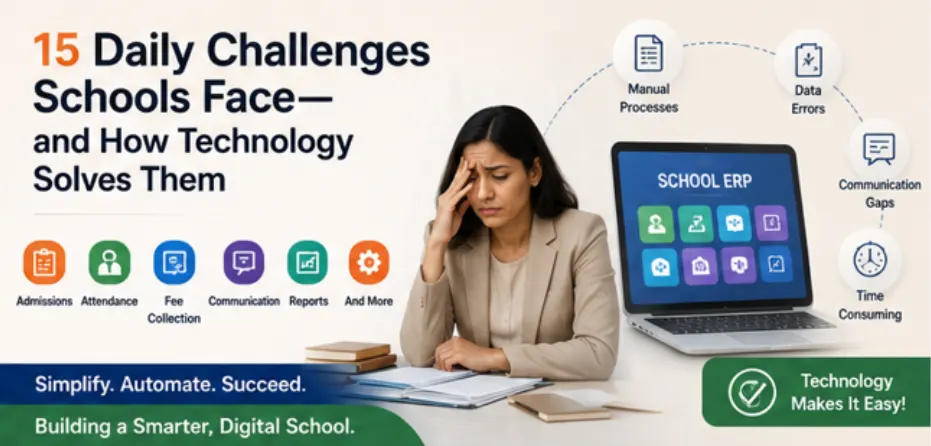
Manual admission processes often create unnecessary delays and administrative challenges.
Some common issues include:
 Lengthy paper-based application forms
- Manual document verification
- Lost or incomplete records
- Slow communication with parents
- Time-consuming data entry
- Difficulty tracking application status
- Increased chances of human error
These inefficiencies can frustrate parents and increase the workload for school staff.
How Digital Admission Management Works
A digital admission system automates every stage of the enrollment process.
A typical workflow includes:
- Parents complete an online application.
- Required documents are uploaded securely.
- The school reviews and verifies applications.
- Parents receive real-time status updates.
- Admission decisions are communicated digitally.
- Admission decisions are communicated digitally.
This streamlined process improves efficiency while providing a better experience for both parents and administrators.
Benefits of Online School Admission
Faster Admission Process
Online applications eliminate the need for manual paperwork and repetitive data entry.
Benefits include:
- Quicker application submission
- Faster document verification
- Reduced processing time
- Improved administrative efficiency
A smooth admission journey helps build trust from the very beginning.
Increased Student Enrollments
A simple and transparent admission process encourages more families to complete their applications.
Schools often see higher enrollment rates because:
- The application process is easier.
- Parents receive timely communication.
- Fewer applications are abandoned.
- Faster processing creates a positive first impression.
An efficient admission experience can become a competitive advantage.
Reduced Administrative Work
Admissions staff spend less time handling paperwork and more time assisting prospective families.
Automation reduces tasks such as:
- Manual data entry
- File organization
- Status updates
- Application tracking
- Report preparation
This allows administrators to focus on improving recruitment and engagement.
Improved Document Management
Digital systems securely store important documents in one place.
Examples include:
- Birth certificates
- Identity documents
- Previous academic records
- Passport-size photographs
- Transfer certificates
Centralized document management reduces the risk of misplaced files.
Real-Time Admission Tracking
Parents no longer need to visit the school or make repeated phone calls to check application status.
An Admission Management System provides updates such as:
- Application received
- Documents verified
- Admission under review
- Interview scheduled (if applicable)
- Admission confirmed
This transparency improves the overall admission experience.
Better Communication with Prospective Parents
Communication plays a vital role in successful admissions.
Schools can instantly send:
- Admission announcements
- Application reminders
- Interview schedules
- Required document notifications
- Confirmation messages
Timely communication increases parent confidence and reduces confusion.
School CRM Improves Lead Management
A School CRM helps schools manage inquiries from prospective parents more effectively.
Instead of losing track of leads, schools can:
- Record inquiries
- Track follow-ups
- Schedule counseling sessions
- Monitor admission progress
- Measure conversion rates
This helps admission teams nurture interested families until enrollment is complete.
Seamless Integration with School ERP
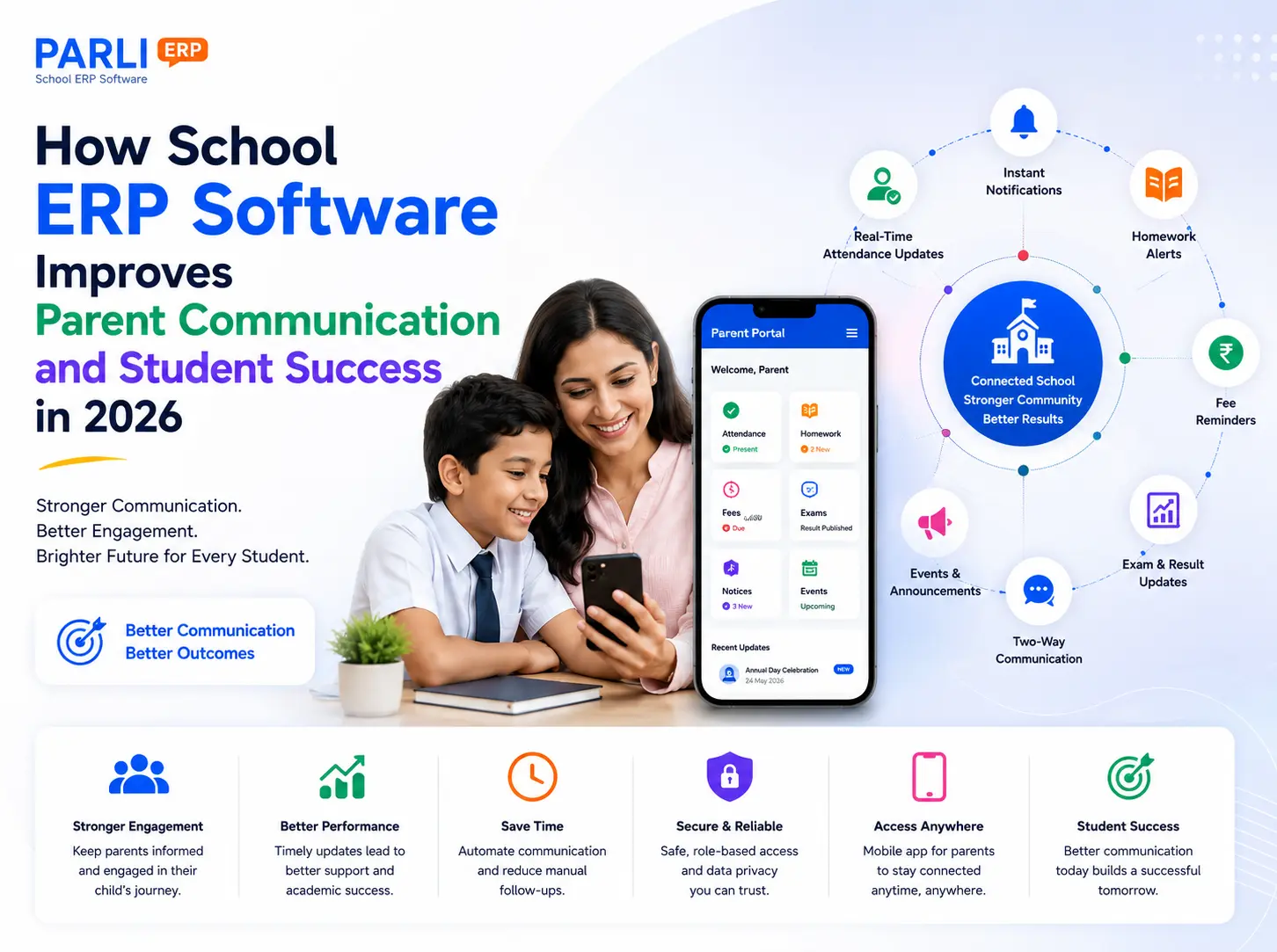
When admission software is integrated with a School ERP, student information flows automatically into other modules.
After admission, administrators can immediately access:
- Student profiles
- Attendance records
- Fee management
- Class allocation
- Parent communication
This eliminates duplicate data entry and improves operational efficiency.
Data-Driven Decision Making
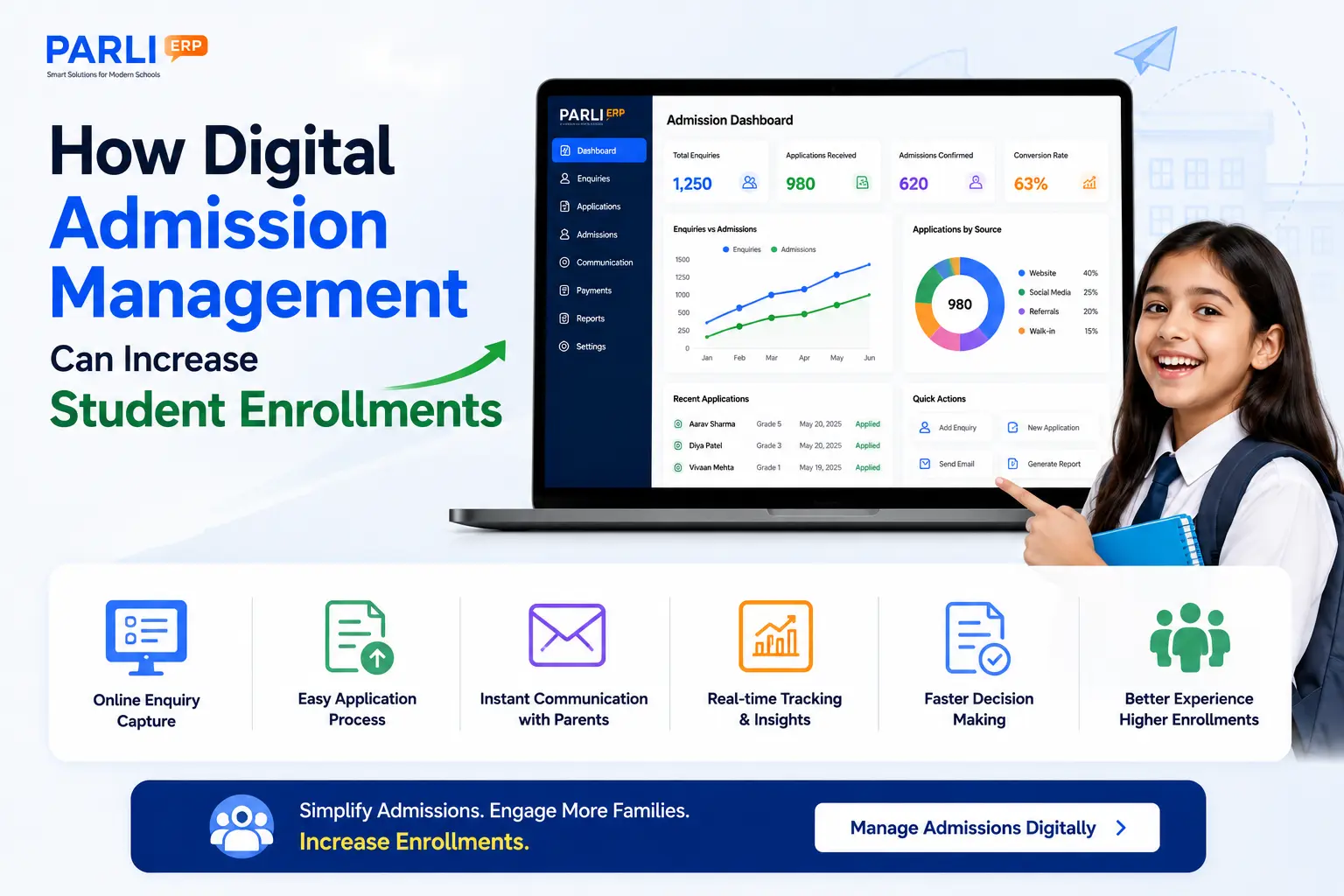
Digital admission systems generate valuable reports such as:
- Number of applications received
- Admission conversion rates
- Enrollment trends
- Popular grade levels
- Application sources
These insights help schools improve future admission strategies.
Essential Features of an Admission Management System
When selecting an admission solution, schools should look for:
- Online application forms
- Digital document uploads
- Application tracking
- Automated notifications
- Parent communication tools
- School CRM integration
- School ERP integration
- Reporting and analytics
- Secure cloud storage
- Mobile-friendly access
These features create a seamless admission experience for both schools and families.
Why Schools Are Adopting Digital Admissions in 2026
Education is becoming increasingly digital, and parents now expect schools to provide the same level of convenience they experience in other online services.
Digital admission systems help schools:
- Increase enrollment opportunities
- Improve parent satisfaction
- Reduce paperwork
- Save administrative time
- Strengthen communication
- Build a professional school image
Schools that modernize their admission process are better positioned to attract and retain students.
Best Practices for Improving Student Enrollments
To maximize enrollment success:
- Improve parent satisfaction
- Respond quickly to parent inquiries.
- Provide clear admission instructions.
- Send regular status updates.
- Use a School CRM to manage prospective families.
- Integrate admissions with your School ERP.
- Monitor reports to improve future campaigns.
Small improvements in the admission journey can significantly increase conversion rates.
Conclusion
A smooth admission process creates lasting first impressions and plays a major role in attracting new students. Schools that continue relying on paper forms and manual administration often struggle with delays, communication gaps, and missed enrollment opportunities.
By implementing an Online School Admission system supported by an Admission Management System, School CRM, and School ERP, schools can automate admissions, reduce paperwork, improve parent communication, and increase student enrollments.
As competition among educational institutions continues to grow, investing in digital admission management is no longer just a convenience—it’s a strategic step toward building a more efficient, transparent, and future-ready school.
Ready to simplify school management?
See how PARLI school ERP software helps schools automate attendance, fees, homework, and parent communication from one platform.