How School ERP Software Is Transforming Modern Education
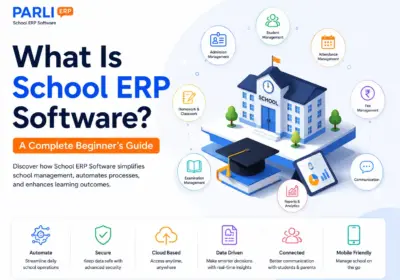
What Is School ERP Software?
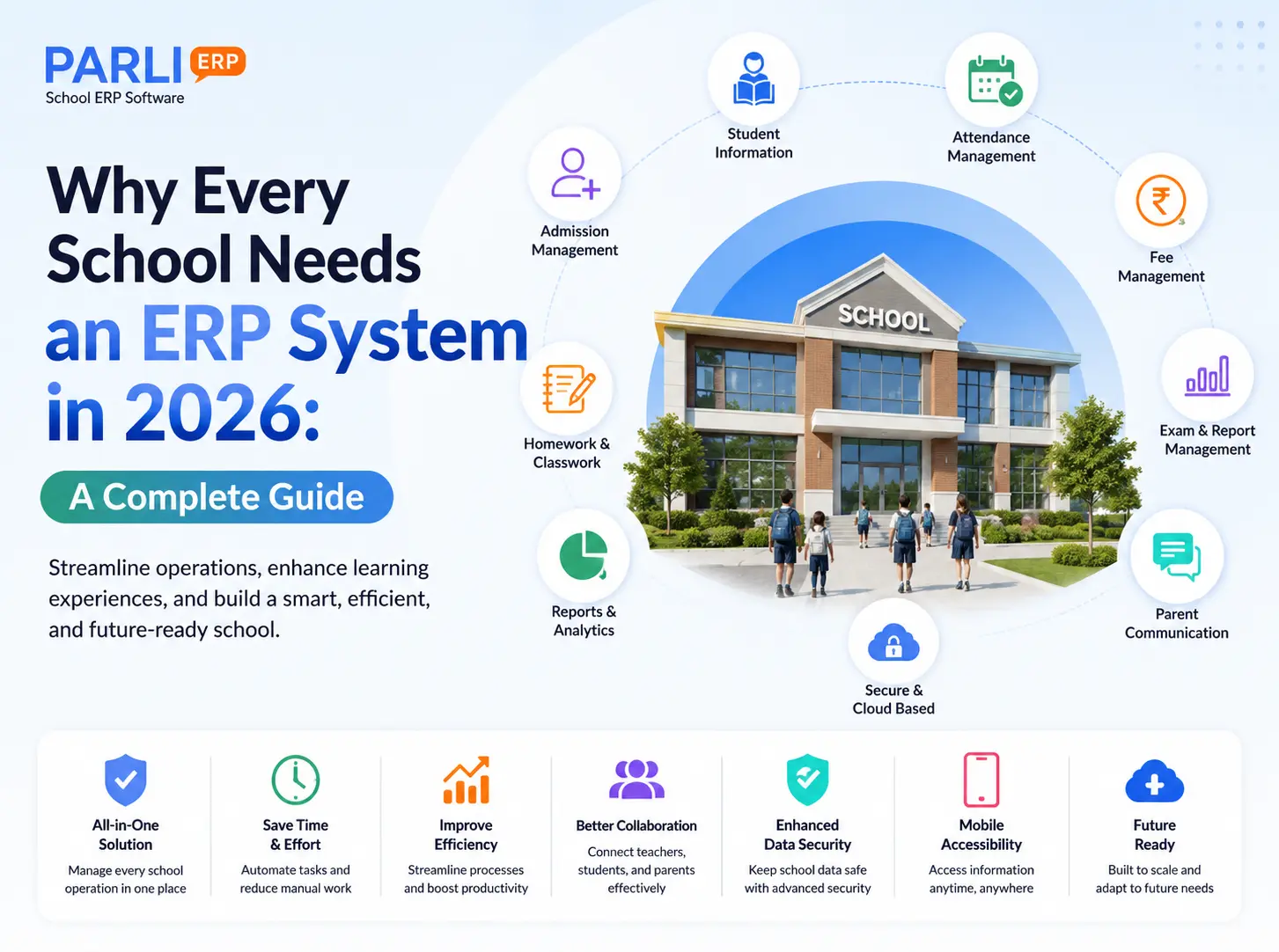
- Student Information Management
- Attendance Management
- Admission Management
- Fee Management
- Examination Management
- Homework & Classwork
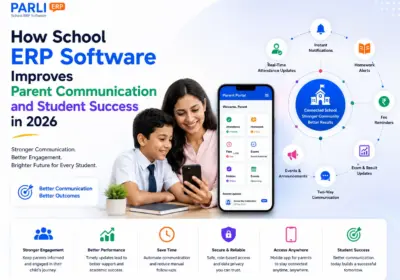
- Parent Communication
- Reports & Analytics
Why Schools Need School ERP Software in 2026
- Attendance records maintained in spreadsheets
- Time-consuming administrative work
- Delayed fee tracking
- Communication gaps with parents
- Manual report generation
- Scattered student records
- Increased chances of human error
01
Simplified School Administration
Administrative teams spend countless hours managing student records, admissions, attendance, and reports.
Key Advantages
- Reduced manual work
- Faster processing
- Improved productivity
- Better operational efficiency
02
Centralized Student Information Management
Managing student records across multiple files can create confusion and errors.
A School ERP stores all student-related information in one secure location, including:
- Personal details
- Academic records
- Attendance history
- Fee details
03
Digital Attendance Management
Attendance is one of the most important daily activities in every school.
With a School ERP, teachers can:
- Mark attendance digitally
- Generate attendance reports
- Track absenteeism
- Share attendance updates with parents
04
Online Fee Management
Fee collection becomes much easier with an automated system.
A School ERP enables schools to:
- Create fee structures
- Track payments
- Send payment reminders
- Generate receipts
- Monitor outstanding dues
05
Streamlined Admission Management
Admissions often involve extensive paperwork and manual verification.
With a School ERP, schools can simplify admissions by:
- Managing applicant records
- Accepting online applications
- Tracking admission status
- Maintaining digital documentation
06
Parent-School Communication
Strong communication builds trust and improves student outcomes.
A School ERP allows schools to share:
- Notices
- Circulars
- Announcements
- Event reminders
- Important updates
07
Digital Homework & Classwork Management
Teachers can assign homework and classwork digitally, making it easier for students and parents to stay updated.
Benefits include:
- Submission monitoring
- Centralized academic records
- Better classroom coordination
- Assignment tracking
08
Examination & Report Card Management
Preparing examination schedules and report cards manually can be time-consuming.
A School ERP simplifies this process by enabling schools to:
- Schedule examinations
- Record marks
- Generate report cards
- Publish results efficiently
09
Real-Time Reports & Analytics
Data-driven decision-making is essential for modern schools.
A School ERP provides instant access to reports such as:
- Attendance summaries
- Fee collection reports
- Admission statistics
- Academic performance reports
10
Role-Based Security & Data Protection
Schools manage sensitive information that must be protected.
Modern School ERP solutions include:
- Role-based access
- Secure login systems
- Data backups
- Cloud storage
- User activity tracking
Key Features Every School ERP Should Include
When selecting a School ERP, ensure it offers:
- Student Information Management
- Admission Management
- Attendance Management
- Fee Management
- Examination Management
- Homework & Classwork Management
- Parent Communication
- Notices & Circulars
- Reports & Analytics
- Mobile Accessibility
- Role-Based User Access
- Cloud-Based Data Storage
How a School ERP Benefits Different Users
For School Administrators
- Mobile accessibility
- Better reporting
- Improved resource management
- Faster decision-making
For Teachers
- Reduced paperwork
- Digital assignment management
- Easy attendance marking
For Parents
- Instant school updates
- Fee information
- Attendance tracking
For Students
- Homework access
- Academic updates
- Examination schedules
- Better learning experience
Signs Your School Needs a School ERP
If your school experiences any of the following challenges, it may be time to implement a School ERP:
- Attendance is managed using Excel sheets.
- Fee records are difficult to maintain.
- Parent communication is inconsistent.
- Student records are scattered across departments.
- Report generation takes too much time.
- Administrative staff are overwhelmed with paperwork.
- School operations are becoming difficult to manage as enrollment grows.
Best Practices for Choosing the Right School ERP
Before selecting a solution, consider the following:
- Choose software with an intuitive interface.
- Ensure it supports your school's current and future needs.
- Look for cloud-based accessibility.
- Prioritize data security and regular backups.
- Check mobile compatibility for teachers and parents.
- Evaluate customer support and training services.
- Compare reporting and analytics capabilities.