The Future of Smart Schools: Technology Trends Every Principal Should Know
Education is evolving faster than ever before. Today’s schools are expected to provide not only quality education but also a seamless digital experience for…
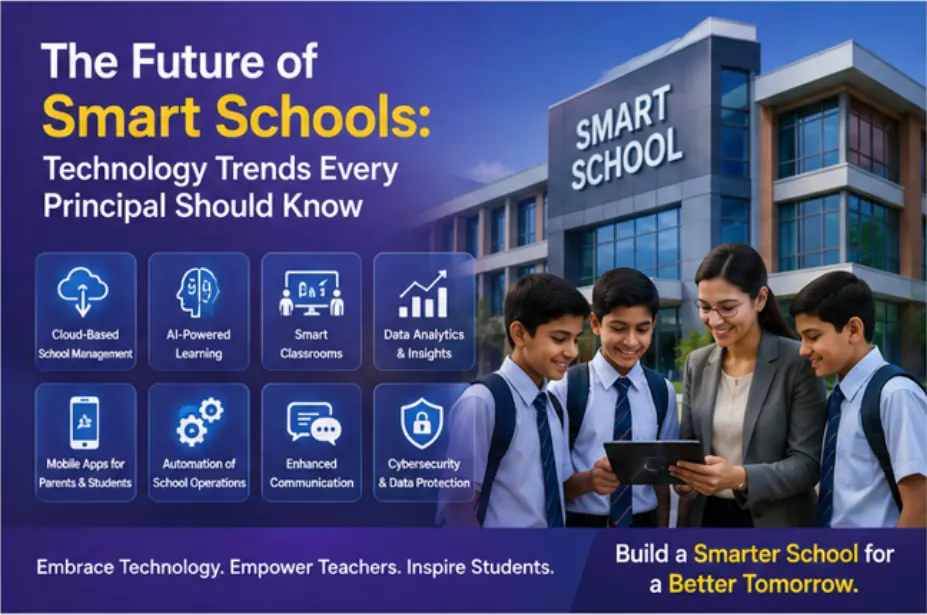
The Future of Smart Schools: Technology Trends Every Principal Should Know
**How Smart Schools Are Transforming Education in 2026 and Beyond**
Education is evolving faster than ever before. Today’s schools are expected to provide not only quality education but also a seamless digital experience for students, parents, teachers, and administrators. From AI-powered learning tools to cloud-based school management systems, technology is reshaping every aspect of education.
For principals and school leaders, keeping up with these changes is no longer optional—it’s essential. Schools that embrace innovation are better equipped to improve operational efficiency, enhance learning outcomes, and meet the growing expectations of modern families.
This is where the concept of a Smart School becomes increasingly important. By adopting modern Education Technology and embracing School Digital Transformation, schools can create a connected, efficient, and future-ready learning environment.
In this guide, we’ll explore the most important technology trends every principal should know to prepare their institution for the Future of Education.
What Is a Smart School?
A Smart School is an educational institution that uses digital technologies to improve teaching, learning, communication, and school administration.
Instead of relying on paper-based processes and disconnected systems, Smart Schools integrate technology into everyday operations.
A Smart School typically uses:
 School ERP systems
- Digital attendance
- Online admissions
- Smart classrooms
- Parent communication apps
- Cloud-based data management
- AI-powered educational tools
- Digital assessments and reporting
The goal is to create a more efficient, engaging, and student-centered educational environment.
Why Schools Are Going Digital
Schools face increasing demands to provide faster communication, accurate data management, personalized learning, and efficient administration.
Digital transformation helps schools:
- Reduce paperwork
- Improve collaboration
- Save administrative time
- Strengthen parent engagement
- Enhance student learning experiences
- Support better decision-making
Technology is becoming a key driver of educational excellence.
Artificial Intelligence in Education
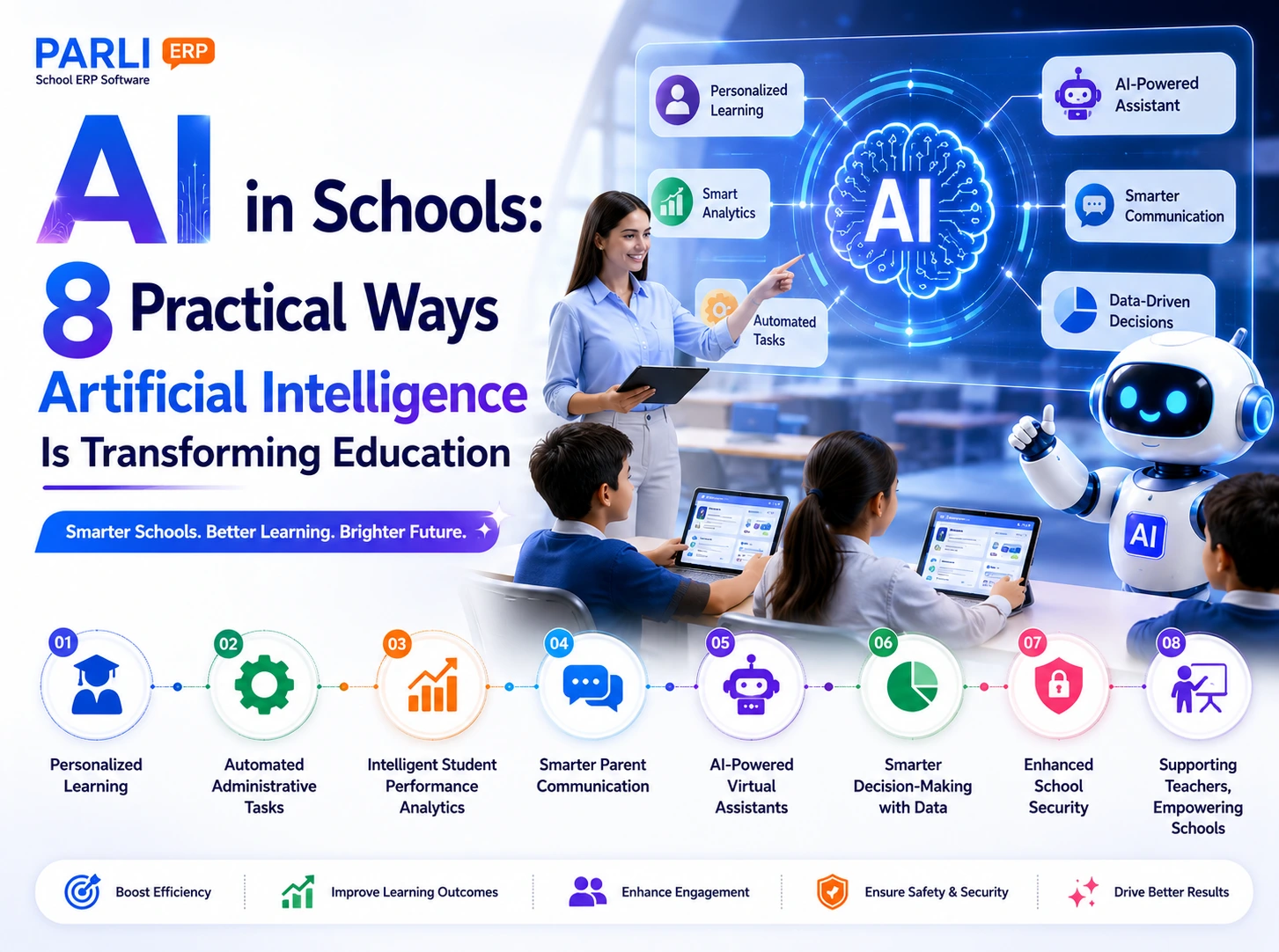
Artificial Intelligence (AI) is one of the biggest innovations influencing education today.
AI helps schools by:
- Personalizing learning experiences
- Identifying learning gaps
- Supporting lesson planning
- Automating administrative tasks
- Analyzing student performance
Rather than replacing teachers, AI enhances their ability to provide individualized support.
School ERP Systems
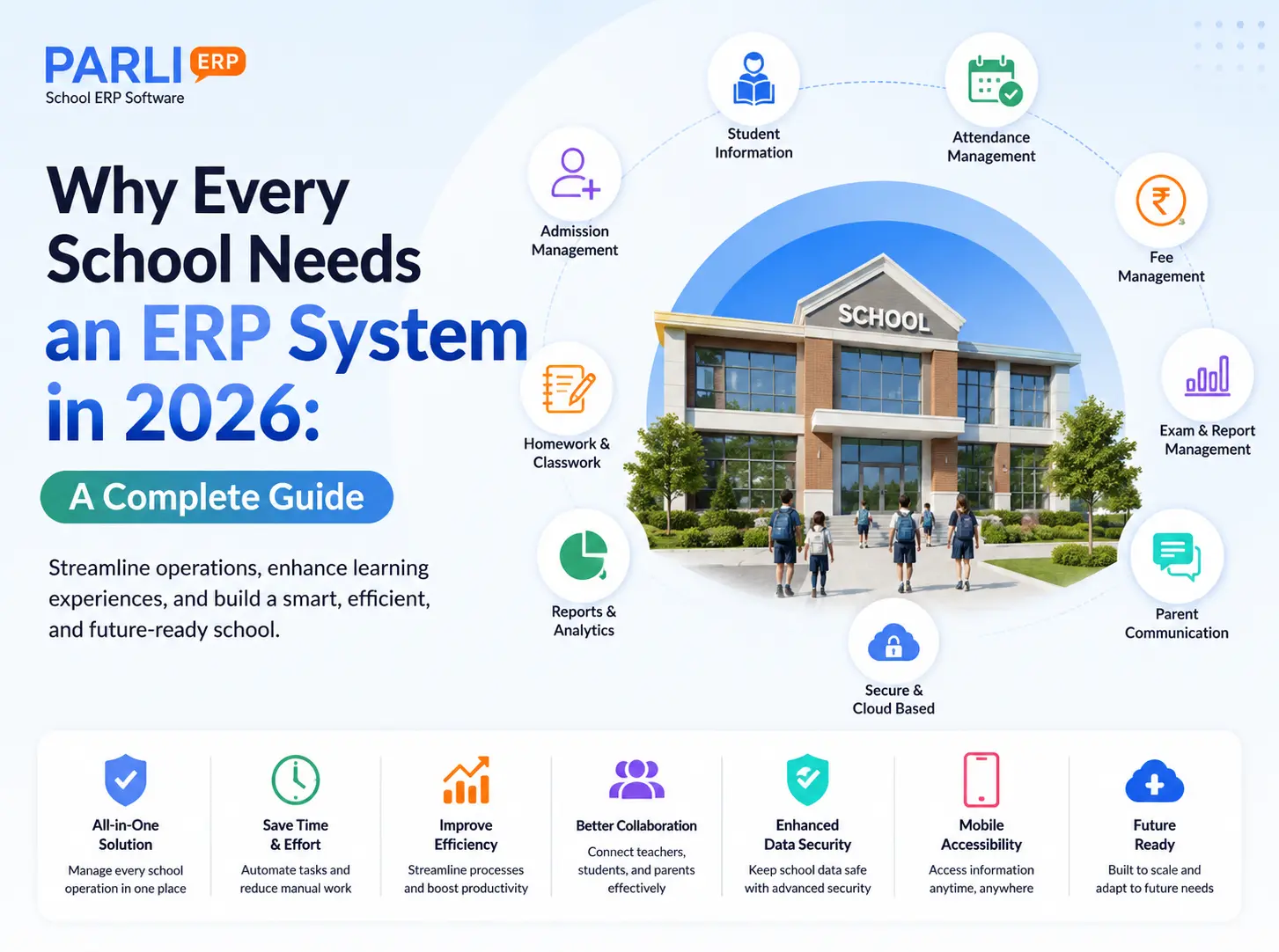
Modern School ERP platforms have become the foundation of Smart Schools.
They help manage:
- Student records
- Admissions
- Attendance
- Fee collection
- Examinations
- Homework
- Parent communication
- Reports and analytics
Centralizing school operations improves efficiency while reducing manual work.
Intelligent Student Performance Analysis
AI systems can analyze student performance data more quickly than traditional methods.
They help schools identify:
- Academic strengths
- Learning difficulties
- Attendance patterns
- Performance trends
- Students needing additional support
Early insights allow teachers to intervene before small challenges become major academic problems.
Smarter Parent Communication
Strong communication between schools and parents contributes to student success.
AI-powered communication tools can assist schools by:
- Sending automated reminders
- Delivering attendance notifications
- Sharing academic updates
- Answering common parent questions through chatbots
- Scheduling important announcements
This improves responsiveness while reducing administrative workload.
AI-Powered Virtual Assistants
Many educational institutions are introducing AI assistants to support students, parents, and staff.
Virtual assistants can help answer questions about:
- Admission procedures
- School timings
- Examination schedules
- Fee information
- Event details
- Frequently asked questions
Providing instant responses improves the user experience and saves valuable staff time.
Smarter Decision-Making with Data Analytics
Schools collect large amounts of information every day.
AI-powered analytics help administrators make informed decisions by analyzing:
- Student enrollment trends
- Attendance reports
- Academic performance
- Resource utilization
- Financial data
These insights support better planning and long-term institutional growth.
Enhanced School Security
Artificial Intelligence can contribute to safer school environments through intelligent monitoring systems.
Potential applications include:
- Visitor management
- Smart surveillance alerts
- Access control monitoring
- Emergency response support
- Security analytics
While human oversight remains essential, AI can improve response times and enhance campus safety.
Supporting Teachers Instead of Replacing Them
One of the biggest misconceptions about AI is that it will replace teachers.
In reality, AI is designed to assist educators by handling repetitive administrative tasks and providing valuable insights.
Teachers can use AI to:
- Create lesson plans more efficiently
- Analyze student performance
- Generate quizzes and practice questions
- Organize classroom resources
- Save time on routine administrative work
This allows educators to spend more time teaching, mentoring, and inspiring students.
Mobile Access for Everyone
Today's school communities expect information to be available anytime.
Mobile applications allow:
Parents:
- Check attendance
- Pay fees
- Receive notices
- Monitor academic updates
Teachers:
- Record attendance
- Assign homework
- Update marks
Students:
- View homework
- Access schedules
- Receive announcements
Mobile accessibility makes school services faster and more convenient.
Cybersecurity and Data Protection
As schools become increasingly digital, protecting sensitive information becomes a top priority.
Key security measures include:
- Role-based access
- Secure authentication
- Data encryption
- Automatic backups
- User activity monitoring
Strong cybersecurity builds trust among parents, teachers, and students.
Benefits of Becoming a Smart School
Schools investing in digital transformation experience improvements across every department.
Greater Administrative Efficiency
Automation reduces repetitive tasks and paperwork.
Better Student Learning
Technology supports interactive and personalized learning experiences.
Stronger Parent Engagement
Parents receive real-time information through dedicated communication platforms.
Improved Teacher Productivity
Teachers spend less time on administration and more time teaching.
Better Decision-Making
Data analytics provide valuable insights for school leadership.
Long-Term Cost Savings
Digital systems reduce paper usage and improve operational efficiency.
How Principals Can Lead Digital Transformation
Successful technology adoption begins with strong leadership.
Principals should:
- Develop a clear digital strategy.
- Invest in scalable technology.
- Train teachers and staff.
- Encourage innovation in classrooms.
- Prioritize data security.
- Continuously evaluate new technologies.
- Focus on improving the overall learning experience.
Leadership plays a critical role in building a culture of innovation.
The Future of Smart Education
As technology continues to evolve, AI will play an increasingly important role in education.
Future developments may include:
- More advanced personalized learning
- Predictive student success analysis
- Intelligent classroom management
- Enhanced accessibility tools
- Improved collaboration between schools and families
- Smarter administrative automation
The schools that embrace Smart Education today will be better prepared to meet tomorrow’s educational challenges.
Why School Digital Transformation Matters
School Digital Transformation is about much more than replacing paper with computers. It involves redesigning school operations to improve efficiency, collaboration, and learning outcomes.
Benefits include:
- Better educational experiences
- Faster communication
- Improved operational efficiency
- Greater transparency
- Stronger parent partnerships
- Future-ready school management
Digital transformation helps schools remain competitive while delivering higher-quality education.
Conclusion
The journey toward becoming a Smart School is no longer a vision for the future—it is happening now. Schools that invest in modern Education Technology, digital management systems, and innovative teaching tools are creating better experiences for students, parents, teachers, and administrators alike.
From AI-powered learning and School ERP platforms to cloud-based management, online admissions, and advanced analytics, technology is redefining how schools operate and grow. Principals who lead School Digital Transformation today will position their institutions for long-term success and prepare students for the demands of tomorrow.
As the Future of Education continues to evolve, embracing innovation is not just about adopting new tools—it’s about creating smarter schools that inspire learning, improve efficiency, and build stronger educational communities.
Ready to simplify school management?
See how PARLI school ERP software helps schools automate attendance, fees, homework, and parent communication from one platform.